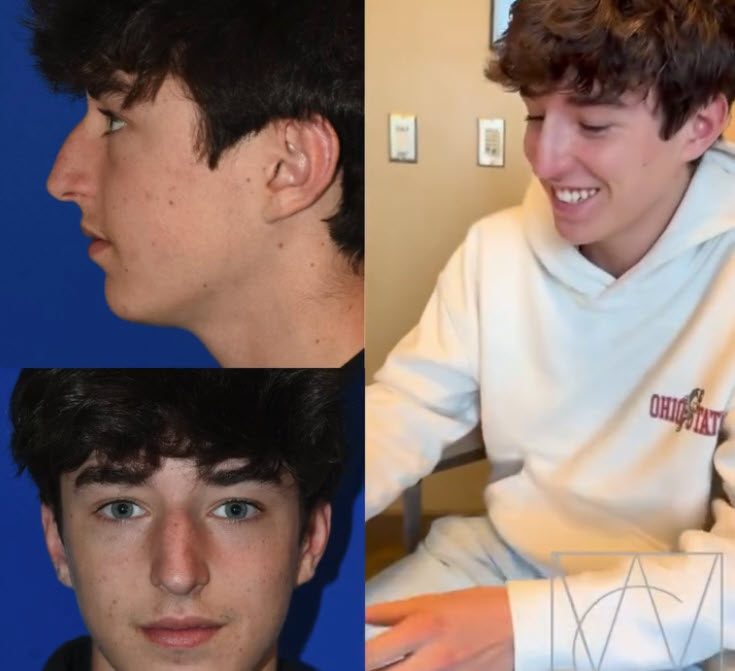
How Long Does a Nose Job Last?
Rhinoplasty is one of the most transformative facial surgeries — people want to know how long the results last. The short answer is: most changes are permanent, but the appearance and function of your nose can evolve over time. This guide explains what “permanent” means, what affects longevity, how aging and injury play a role, and when revision surgery might be appropriate.
Is a nose job permanent?
Rhinoplasty permanently changes bone and cartilage shape. When a surgeon removes or reshapes cartilage or bone, those changes do not revert. In that sense, a nose job is permanent. That said, the final long-term appearance depends on healing, how the nose is supported after surgery, and natural aging — so “permanent” does not always mean “unchanging.”
What stays permanent and what can change?
Permanently changed: Bone segments removed or fractured (osteotomies) and cartilage removed from the septum are permanent modifications. If your dorsal hump is lowered surgically, that change remains.
May evolve over time: Soft tissue contours, scar tissue, and subtle tip position can continue to refine for up to 12–18 months after surgery. The nose will also age with you — skin thins, soft tissues descend slightly, and gravity changes projection. These age-related changes are natural and occur even in people who never had surgery.
Key factors that influence how long results last
Longevity depends on several interrelated factors:
- Surgical technique: A technique that preserves or rebuilds nasal support (using grafts where needed) will produce more stable results than aggressive resections without reinforcement.
- Quality and amount of cartilage: Patients with thin septal cartilage or prior surgeries may require grafts (ear or rib) to maintain shape long term.
- Healing and scar formation: Individual healing responses vary — some form firmer scar tissue that stabilizes quickly, others have slower remodeling.
- Trauma or injury: A subsequent nasal injury can alter or reverse some cosmetic changes.
- Aging: Natural aging gradually affects projection, tip rotation, and skin quality.
Primary vs. revision rhinoplasty — survival of results
Primary (first-time) rhinoplasty generally has more predictable, durable outcomes because more native tissue and cartilage are available. Revision rhinoplasty — surgery to correct or improve a prior result — is often more complex. Scar tissue, previous cartilage removal, and altered anatomy increase the technical difficulty and can influence longevity. Successful revisions that use robust grafts to rebuild structure can last many years, even decades, but they may require more extensive reconstruction at the time of surgery.
How aging affects a surgically altered nose
Even after a technically perfect rhinoplasty, the nose continues to age. Key changes include:
- Gradual tip droop or loss of rotation due to soft tissue relaxation and gravity.
- Skin envelope changes — thinning or thickening — that alter the visible contours.
- Loss of subcutaneous fat and collagen that can change nasal lines subtly over many years.
These are normal, slow processes. Patients sometimes opt for minor revisions later in life if age-related changes affect aesthetics or breathing.
Materials and grafts — does choice matter for longevity?
Graft materials (septal, ear, or rib cartilage) are chosen based on how much support is needed. Autologous cartilage (your own tissue) integrates well and tends to be long-lasting. Silicone and other synthetic implants are available in some regions, but they carry higher risks of extrusion, infection, and long-term problems — most experienced rhinoplasty surgeons prefer autologous grafts for durable, natural results.
When might you need revision surgery?
Revision is considered when functional or cosmetic goals haven’t been met or when changes develop later that cause symptoms or dissatisfaction. Common reasons for revision include:
- Persistent or new breathing difficulties due to valve collapse or septal issues.
- Unwanted cosmetic irregularities — saddling, asymmetry, or tip deformities.
- Long-term changes from prior over-resection or poor structural support.
Timing matters: most surgeons wait at least 12 months after primary rhinoplasty before performing revision, giving tissues time to stabilize unless urgent problems (infection, skin breakdown) require earlier attention.
How to maximize the lifespan of your rhinoplasty results
- Choose an experienced rhinoplasty surgeon who emphasizes structural support and long-term stability.
- Follow postoperative care instructions — protecting your nose from trauma, managing swelling, and avoiding activities that risk impact for the recommended period.
- Protect your skin from sun damage and maintain skin health; thinning or damaged skin changes how the nose looks over time.
- Address breathing issues early — functional problems left untreated can cause poorer quality of life and sometimes progressive deformity.



No comments:
Post a Comment