
Revision rhinoplasty—also called secondary rhinoplasty—is performed to improve function or appearance after a previous nose surgery. Because it must work with altered anatomy and scar tissue, it is widely considered one of the most technically demanding procedures in facial plastic surgery.
What Is Revision Rhinoplasty?
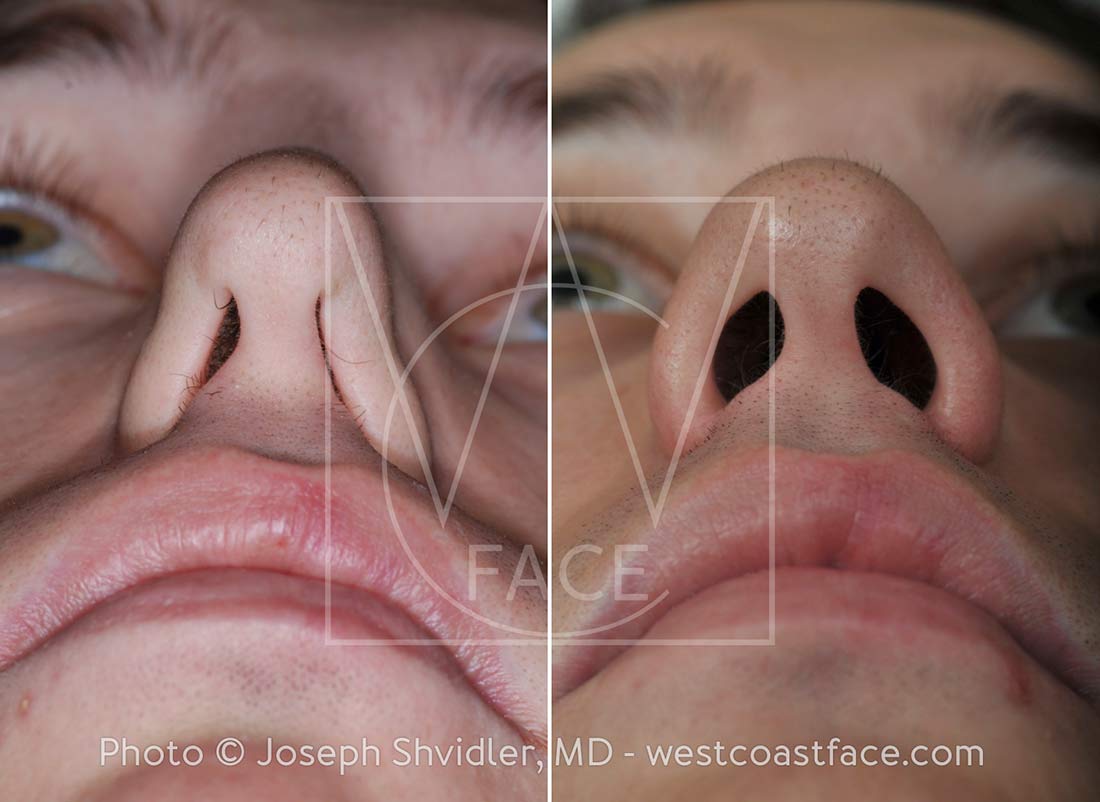
Revision rhinoplasty addresses concerns that remain after a prior rhinoplasty or nasal procedure. These concerns may be aesthetic—such as asymmetry, a pinched tip, a collapsed bridge, or an over-resected hump—or functional, like difficulty breathing due to internal valve collapse, septal deviation, or scarring that narrows airflow.
The procedure can involve delicate reshaping of cartilage and bone, strengthening of weakened structures with grafts, and correction of scar-related irregularities. The overarching goals are to restore nasal support, refine proportions that harmonize with the face, and improve nasal function so that you can breathe comfortably.
Who Is a Good Candidate?
- You have persistent cosmetic concerns after a previous rhinoplasty.
- You experience obstruction, congestion, or exercise-related breathing issues.
- Your nasal shape has changed over time as swelling settled or cartilage warped.
- You are in good general health and have realistic expectations.
- At least 12 months have passed since your last nasal surgery, allowing tissues to mature.
An in-depth consultation includes a review of surgical history, photographs, and physical examination of internal and external nasal structures. Computer imaging may be used to align goals with what is surgically feasible.
Common Problems Addressed
Breathing Difficulties
Internal or external valve collapse, residual septal deviation, turbinate hypertrophy, and scarring can narrow airflow. Techniques such as spreader grafts or valve support can restore function.
Tip Irregularities
A tip that looks bulbous, boxy, pinched, or asymmetric may be refined with suturing techniques, cartilage reshaping, or structural grafts to provide definition and stability.
Bridge & Profile Issues
Dorsal irregularities, a residual hump, or a “scooped” bridge after over-resection can be smoothed or rebuilt using cartilage or soft-tissue grafts for a natural profile.
Twisted or Crooked Nose
Deviations may stem from septal shifts or asymmetric cartilage support. Realignment often combines septal straightening with grafts to correct torque and improve symmetry.
Surgical Approach & Techniques
Revision rhinoplasty can be performed using an open approach (a small incision across the columella plus internal incisions) or a closed approach (internal incisions only). The open method offers direct visualization, especially useful when prior surgery has altered anatomy. The choice depends on your needs, the degree of scarring, and the complexity of corrections.
Cartilage Grafts
Because original support may have been removed or weakened, cartilage grafts are frequently necessary to rebuild a stable framework. Common sources include:
- Septal cartilage (if available) for spreader or onlay grafts.
- Ear cartilage (conchal) for tip support or soft contouring.
- Rib cartilage when larger, stronger grafts are needed to reconstruct the bridge or nasal valves.
Your surgeon may also use techniques such as spreader grafts to widen the internal valve, alar batten grafts to support the nostrils, or diced cartilage with fascia to smooth contour irregularities.
Anesthesia, Timing & Recovery
Revision rhinoplasty is typically performed under general anesthesia. Procedure time varies with complexity. After surgery, most patients experience swelling, bruising around the eyes, and congestion that improve steadily over one to two weeks. A small external splint may be used for support.
- First week: Rest, head elevation, cold compresses as advised. Splint removal typically occurs around day 5–7.
- Weeks 2–4: Bruising fades; light activity resumes. Avoid strenuous exercise and protect the nose from accidental bumps.
- Months 3–6: Swelling continues to decline and results become more refined.
- Up to 12–18 months: Final definition appears as tip swelling resolves, particularly after structural reconstruction.
Your care team will provide instructions on cleaning, taping if recommended, and follow-up visits to monitor healing and address questions.
Risks & Considerations
As with any surgery, there are risks such as bleeding, infection, delayed healing, anesthesia reactions, or unfavorable scarring. Specific to revision rhinoplasty, challenges include limited available cartilage, stiff or fragile tissues, persistent asymmetry, and the possibility of additional touch-ups. Choosing a surgeon experienced in complex nasal reconstruction helps minimize these risks and set realistic expectations.
What Results Can You Expect?
The goal is a natural-looking nose that functions well and suits your facial features from all angles. Subtlety is key; the best outcomes restore balance rather than draw attention. While revision rhinoplasty can achieve transformative improvements, perfection is not guaranteed, and small asymmetries are normal in human faces.
Choosing the Right Specialist
Because revision cases demand advanced skills, seek a surgeon who focuses on facial plastic surgery and performs revision rhinoplasty regularly. Review before-and-after photos of similar concerns, ask about the surgeon’s approach to grafting and nasal valve support, and discuss anticipated recovery and milestones. Clear communication about goals and limitations lays the groundwork for success.
Questions to Ask During Consultation
- What are the primary functional and aesthetic issues in my case?
- Which approach (open or closed) do you recommend and why?
- Will I need cartilage grafts, and from what source?
- How will you support my nasal valves to improve breathing?
- What is the expected recovery timeline and follow-up schedule?
Preparing for Surgery
Prior to your procedure, you may be asked to pause certain medications or supplements, avoid smoking and nicotine exposure, and arrange help at home for the first days of recovery. Planning ahead for work, school, and exercise restrictions reduces stress and supports a smooth healing experience.
Summary
Revision rhinoplasty is a highly individualized procedure that can correct lingering concerns from a prior nose surgery and improve nasal breathing. With thoughtful planning, structural techniques, and careful postoperative care, many patients achieve lasting, natural-looking results that enhance both form and function.



No comments:
Post a Comment